Add This

Bookmark and Share
Showing posts with label Technology. Show all posts

Tuesday, 20 September 2016

AR and VR in the LRC

With the arrival of our new Leap Motion devices, and our existing Google Cardboard we have had the opportunities to really explore with our students. These coupled with our existing iPads and QR code Apps, have lead to a series of exciting activities so far, this school year.

Leap Motion in 11th Grade ITGS 

We have been  looking at input devices in 11th grade ITGS. This was a prime opportunity to test out with the leaps and have the kids prepare their own activities. During the session, we worked with both the Leap Motions and MakeyMakey input devices, both of which are powerful learning tools, however, this post is about AR and VR, so we will leave the MakeyMakey discussion for another time.

In order to prepare for the lesson, I provided students with a link to the Leap Motion Gallery and asked them to choose and download a couple of modules they were interested in trying out. It is important to note that there are a great variety of activities to choose from, unfortunately, some are not available for Mac users. It was easy to share the information with students, as we are using Google Classroom to run our lessons and communicate with each other. The kids had a wonderful time exploring different modules. You can view some of the work they did in this mashup video from the input lesson.

*We did find,  that we had to really work initially to get used to the range that the Leap Motion would detect. Students persisted and did get the hang of it rather quickly in the end.


Google Cardboard in 12th Grade ITGS

In 12th grade, we have been looking at wearable technology, what better time to bring out the Cell phones and Google Cardboard.

The kids downloaded the appropriate app to their cell phones for homework and after a brief introduction they partnered up and we took the tech outside. It is important to have kids working in pairs with VR as it is easy for them to trip and bump into things. Our students spotted each other in partners and took turns with the viewers.

The excitement quickly crescendoed,  as students explored using these simple cardboard devices. They were immersed in what they were doing,  actively exploring, evaluating the technology and having a great deal of fun doing so. All we needed to accomplish this was the cheapest of cardboard viewers,  their own cell phones, and the free apps. You can even download templates to help you build your own cardboard viewers.

Here are a few options for doing this:
Instructables
Pocketlint
Google Cardboard Production Kit

Please see the previous post for a short video and further details on this activity.


QR Code Scavenger Hunt-6th Grade LRC Orientation


Each year we host an orientation session in the Learning Resources Centre for the 6th grade students moving up to Secondary.

This year we decided to take advantage of the popularity that has grown around Pokemon Go and use it as our hook. We used our Pokemon theme, along with our existing iPads, a QR Code reader (We prefer i-nigma),  paired with physical QR Codes to build a massive (I kid you not-over 100 students strong!) scavenger hunt.

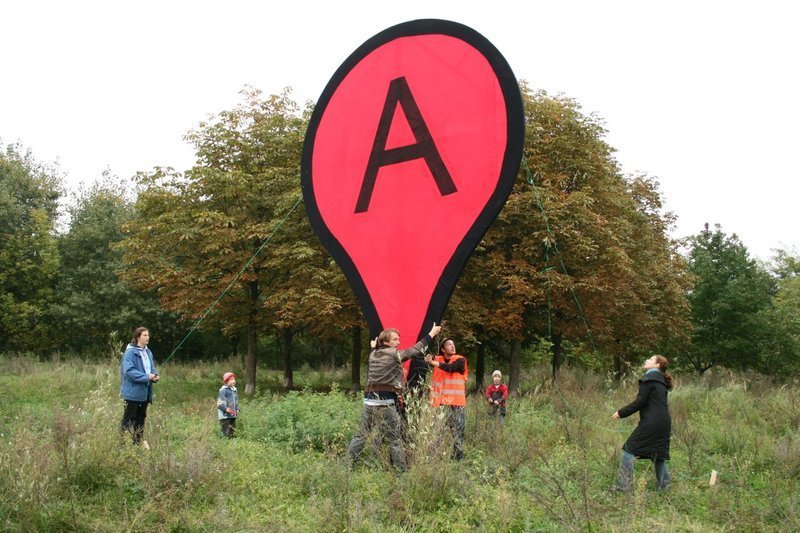
The  QR codes were used to place scannable text clues within Pokeballs which were distributed around the school, along with Pokemon characters. We used Google Maps to create a perimeter map for the work and determined different routes for each team.

Teams started off with a small Ziploc bag containing their first QR Pokeball clue and a copy of the map. Each team was given an iPad.  It was delightful to watch the students tearing across the field, verifying their positions on the map, discovering their clues and rushing to see which would be the first group to finish. Some of them even ended up in the shrubs outside the headmaster's office. Upon arrival at the LRC(They all ended up here), they had a book related clue to resolve and activity to complete upon finding the right location and identifying the book. They were then given some time to browse the resources on offer.

Here are is a link to the photo gallery for the event.

We have plenty of other activities planned for the school year involving our modest collection of AR and VR devices and applications and are looking forward to discovering, even more applications to use in our regular lessons and special events. The next step is to have t-shirts made for our annual book week, covered in interesting codes and having students scan us as we move about the school.

*One last note, we used to create VR pop-up books using Zooburst, which was a great application, however, the site has since closed.  They do offer an App however that seems to still be available. It is an app worth investigating.

Thursday, 22 March 2012

Speed Geeking!


On Saturday March 17th The LRC and ICT Committee held the annual T4L or technology for learning morning.
After a lovely breakfast, courtesy of the school, staff were treated to a special keynote session live from London, on  3 trends in education.
Next, everyone engaged in a speed geeking session. Teachers spent 4 minutes at a station in a circuit of 13 stations and moved on to the next station each time the whistle was blown. During each stop they learned about a different T4L tool. Some of the themes included  less traditional teaching and learning tools such as World of Warcraft, Minecraft, Lego and incredibots, as well as newer tools including iPads and digital flip books. There were plenty more amazing ideas shared at this time. They are outlined in the copy of our program below. 
Next, staff members participated in 2 digital playground sessions in which they were able further explore the tools  they were most interested in.We chose two sessions as we had more topics than presenters and this allowed us to swap over between the two.
These were all dynamic learning experience, but what made these sessions even more exciting is that many of them were lead by our ABC students.We had a total of 17 students volunteer to run sessions, both speed geeking and in the digital playground. We gave them some guidelines, talked to them about what they could do and they took it from there. They were fantastic! Many members of staff came up to me after the fact to mention how impressed they were by what the students were doing. 
PLANNING
 A Google Site was created to house content for the session in the form of web pages, one per idea. The initail Google Docs planning was  also transferred over to the site. This included lists of students, activity rotations  and presenters, circulation maps and links to the program. Google Forms were used to collect attendee lists as well as after session feedback from teachers. This particular site is restricted to staff members only, but you can get a taste of some of the sessions by looking at a few of the pages which I cloned for my Inset Wiki.
Please check out our Flickr Set and Facebook Album for more on this great event!     


Thursday, 29 September 2011

The Future of Learning

I came across this great presentation by Steve Wheeler at the University of Plymouth on the future of education this morning, as I was trawling through my scoop.it updates.

It's interesting to see how many new technologies were met with resistance and are either still going strong in some form or other, or have become a thing of the past only after many years of being the "new tools". What is really powerful is the concept of digital evolution as opposed to digital revolution, the idea of merging virtual and real worlds.  If you look at Steve's 6 trends for a the digital age, it becomes obvious that we are smack in the midst of this particular merger.


Saturday, 5 February 2011

Digital Storytelling

We as teachers are storytellers. Our teacher stories may be about historical events or something fictitious, a retelling, an explanation. These are only a few examples, as a complete listing would be very extensive. Our students also tell stories in a similar fashion. We ask them to present, write essays, explain, create, retell, demonstrate, illustrate, etc.. on a daily basis. It makes sense that we model these skills and teach them how to use a broader range of storytelling tools.

Below you find a listing of just such tools. They are digital tools for telling stories. The are certainly not the only tools. There are far too many to try out in just one session, literally thousands exist. What you will find however, is that the tools below are educationally proven to work; they are free(with basic accounts), user friendly, versatile, fun and provide high impact results for teaching and learning.

It is our sincerest hope that amongst this small example of digital tools, you will find one that you are truly drawn to. One whose teaching and learning potential beckons you; a tool to make a part of your very own digital toolbox.


Podcasting Other Audio Programming
Screen_shot_2011-02-05_at_9.32.26_AM.png
GarageBand 1
Screen_shot_2011-02-05_at_9.32.26_AM.png
GarageBand 2

Screen_shot_2011-02-05_at_9.32.48_AM.png
Screen_shot_2011-02-05_at_9.36.43_AM.png
Create collaborative, interactive
slide shows.

Screen_shot_2011-02-05_at_9.37.31_AM.png
Make your pictures speak.

Screen_shot_2011-02-05_at_9.38.21_AM.png
Talking customizable avatars.
external image scratch1.jpg
Create interactive stories,
presentations and games
Lessons

Presentations

external image prezi.jpg
Create zooming presentations.
Videos Books Tours
Screen_shot_2011-02-05_at_9.31.56_AM.png
Create orchestrated videos
with pictures, video and music.

external image xtranormal-movies-client-vs.-designer.jpg
Create video animations.

external image google-search-stories-creator-1.jpg
Create videos based on search
terms.

Stop Motion
Screen_shot_2011-02-05_at_10.47.05_AM.png

Lesson 1

Lesson 2

Other Video Lessons
Screen_shot_2011-02-05_at_9.41.14_AM.png
Create 3D pop-up books.

Cartoons
Screen_shot_2011-02-05_at_9.59.45_AM.png
Cartoon strip generator for
under 13.
toondooLogo.png
Cartoon strip generator for 13
and older.
external image 833google-maps-a-real-life.jpg
Create collaborative online
maps and tours.

external image bouncing-google-earth.jpg
Create interactive 3D tours with
embedded content.

external image GoogleLitTrips.jpg

Interactive literature based tours.


*If you are interested in investigating additional digital storytelling tools, use these resources which were compiled by a panel of international educators.
Enhanced by Zemanta

Tuesday, 1 June 2010

Coming to an End

It is the end of the school year, only a few more weeks to go. A time for relection amidst reports, grades and special activities.

When I look back on sy09/10,  I feel a  sense of amazing accomplishment for our school. This past year our students and teachers made incredible strides, in working with technology as part of their teaching and learning endeavors.

During this past year,  the LRC continued to support departmental and cross curricular projects, as well as teach normal ICT and web fluency lessons, but amidst this, something out of the ordinary occurred! On many occasions Teachers and students arrived, ready to work on  an array of web 2.0 and digital media projects, with the skills to implement them- and this is the clincher- with little or no support.

We have gone from a point of steep learning curves to a lesser incline in which our staff and students are comfortable with current technology. We as a school are now  building upon our new found skills and utilising well stocked digital toolboxes, to support and enhance learning across subjects.

Students are in a position to choose between a multitude of applications and tools, finding the one that is just right for their work. At any given time they may be creating a video, podcast, cartoon strip, writing a Scratch program or creating a Prezi all for the same assignment. What's phenomenal  about this  is not that they can use the tools, but that they are taking their own approaches, choosing amongst appropriate applications, while embarking on these learning journeys. Equally as exciting is the fact that teachers are allowing,  no- encouraging them, to do so. We have reached a point in which students can take the first steps in directing aspects of their own learning, and teachers are fine with this.

I have been working on my End of Year Headmaster's Report (which is probably way too long), over this past week. I found it hard to sit down to it initially, perhaps feeling a bit overwhelmed by all that needed including, not knowing where to begin.  As I began going through it however, I felt myself  thrown back in time and immersed in each of the experiences that I was recording. I was awed to see just how much has been accomplished this school year.

I realise that our school's experiences are not totally unique, in fact I would be terribly concerned if this were the case. It is my hope that my colleagues around the world are taking a moment from busy schedules to reflect on their school year, whether half way through or finishing up for the year.  I would hope that they are overcome by smiles and a sense of pride in their institutions, when they too realise just how  incredible their school's journeys  have been.
Reblog this post [with Zemanta]